For a timber deck that is safer, cleaner and will see out the years, look no further than this guide as your point of departure. Out here in Australia one has to put up with UV, rain, mould and the odd bit of backyard abuse on outdoor timber; regular upkeep is therefore not optional. Without it a deck will be grey, rough as guts and splintered in no time, not to mention slippery.
Simon Bradshaw here. I have come to appreciate that maintaining a deck is a matter of sensible timing, not some heroic bout of cleaning. Let leaves and debris make themselves at home in damp corners for a few months and you have problems. And do not think pressure cleaning is a panacea; apply it without care and it will chew the soft timber and leave you with a deck that appears to have had words with a cheese grater. These are important considerations when refreshing backyard surfaces.
Start With A Safer Deck
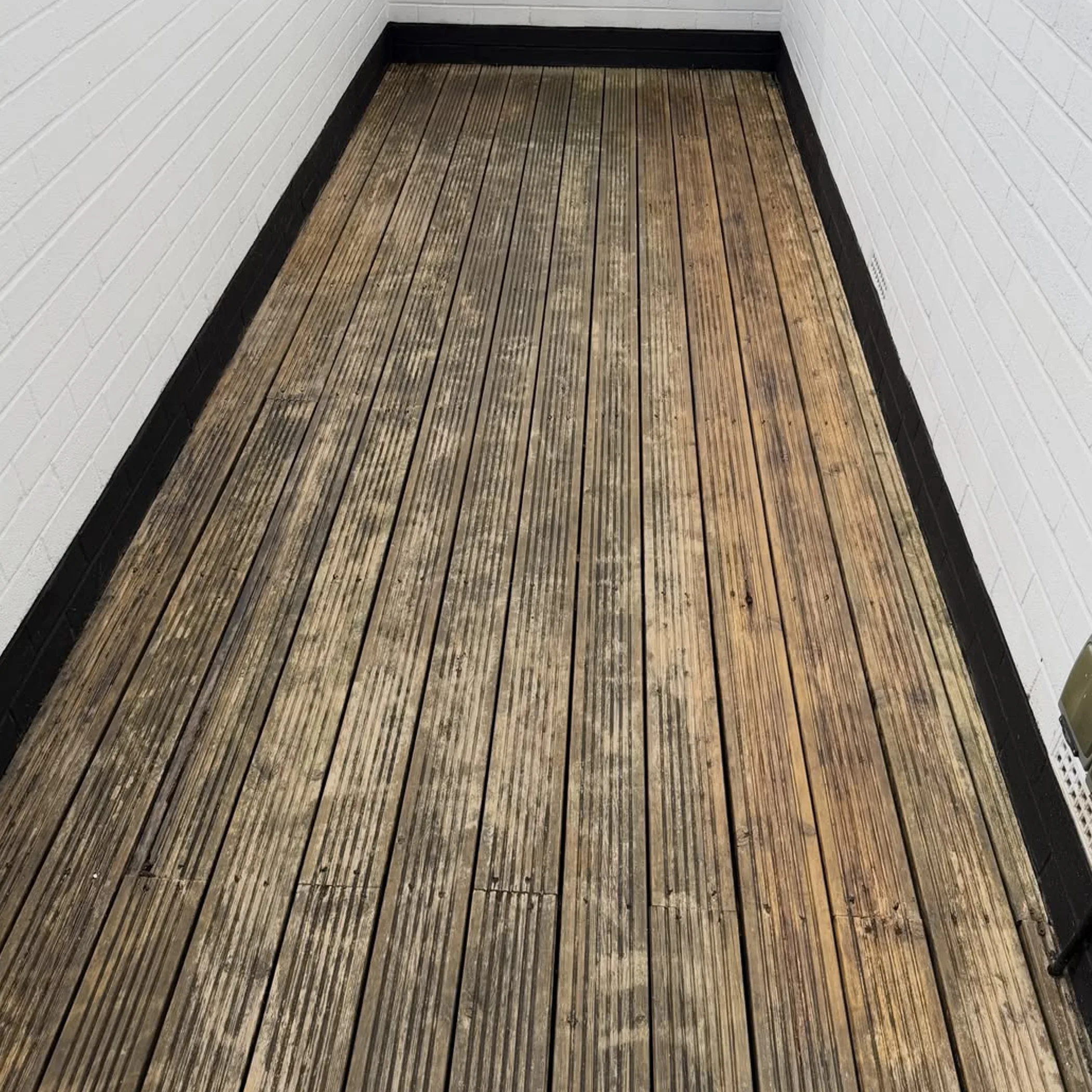
In Australia you should put safety before soap when it comes to maintenance. See if the boards, handrails, stairs and fixings can stand up to it before you start to scrub.
On an older deck or a coastal property under the hard Australian sun it is all the more pertinent. Should the structure give way underfoot or you spot a damaged board, put the cosmetic side of things on hold and address that.
Check The Timber First
Make a slow walk of the whole deck. You want to find any soft spots, raised nails, loose screws or rot, particularly around the posts, drainage and stairs. Put aside the barbecue shelves, pot plants and furniture for the inspection. There is no point in putting them back and calling it a day; moisture from a rubber mat can soften or stain the timber and you will be left with dark patches where the grime was hidden.
Protect People And Plants
No children or pets about until there is no residue and the deck is dry. Put the cushions inside and see to it your dirty water does not end up in a pond, stormwater drain or garden bed from your mould treatment or deck wash.
As for gloves, enclosed shoes and eye protection, they are a must when you are using sanding gear or anything of a stronger nature. For chemical safety information refer to Safe Work Australia. And read the label.
Prepare Before You Wash
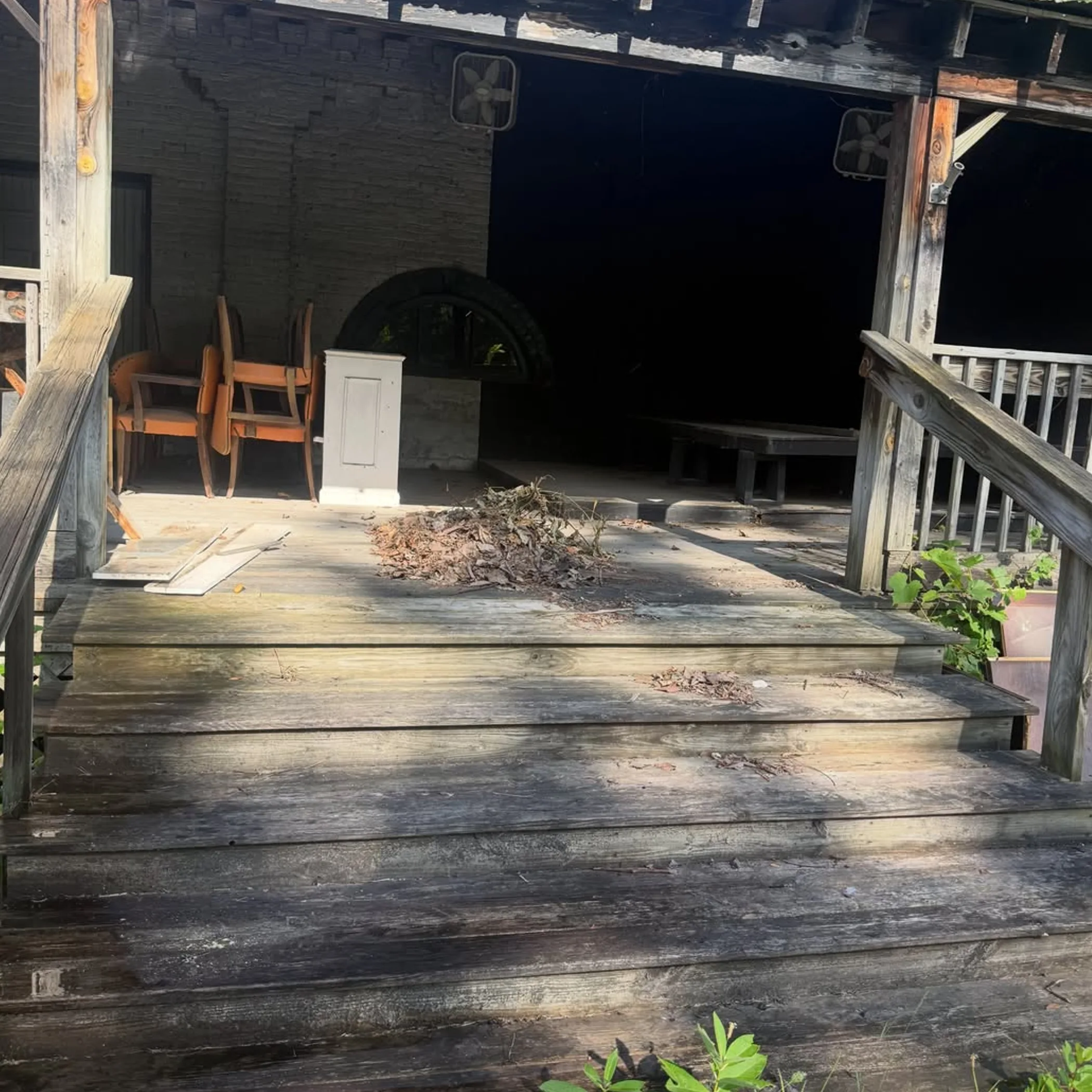
A plan and a clear surface will save you time and marks. The common error is to believe a bucket, hose and some enthusiasm is all that is required. Pick a mild, dry spell with little direct sun. If the timber dries out too fast the cleaner will mark it patchily, and a pre-emptive rain means you have to do it over again.
Use This Checklist
- Clear the gaps, stairs and drainage of debris and leaves.
- Put away toys, mats and furniture.
- Broom off any loose dirt.
- Any unsafe boards or protruding fixings need replacing or repair.
- Make sure the area is protected (walls, glass, painted surfaces) and test the cleaner in an inconspicuous spot.
- Have on hand a bucket, hose, deck wash, soft brush, eyewear and gloves. Leave the stiff metal brush alone, it is apt to gouge the grain. I have seen a homeowner with a fine deck ruin his afternoon making a broad set of scratches from a small stain by being overzealous with the wrong implement.
- Ensure pets and children are kept off until it is fully dry.
Clean Timber Without Damage
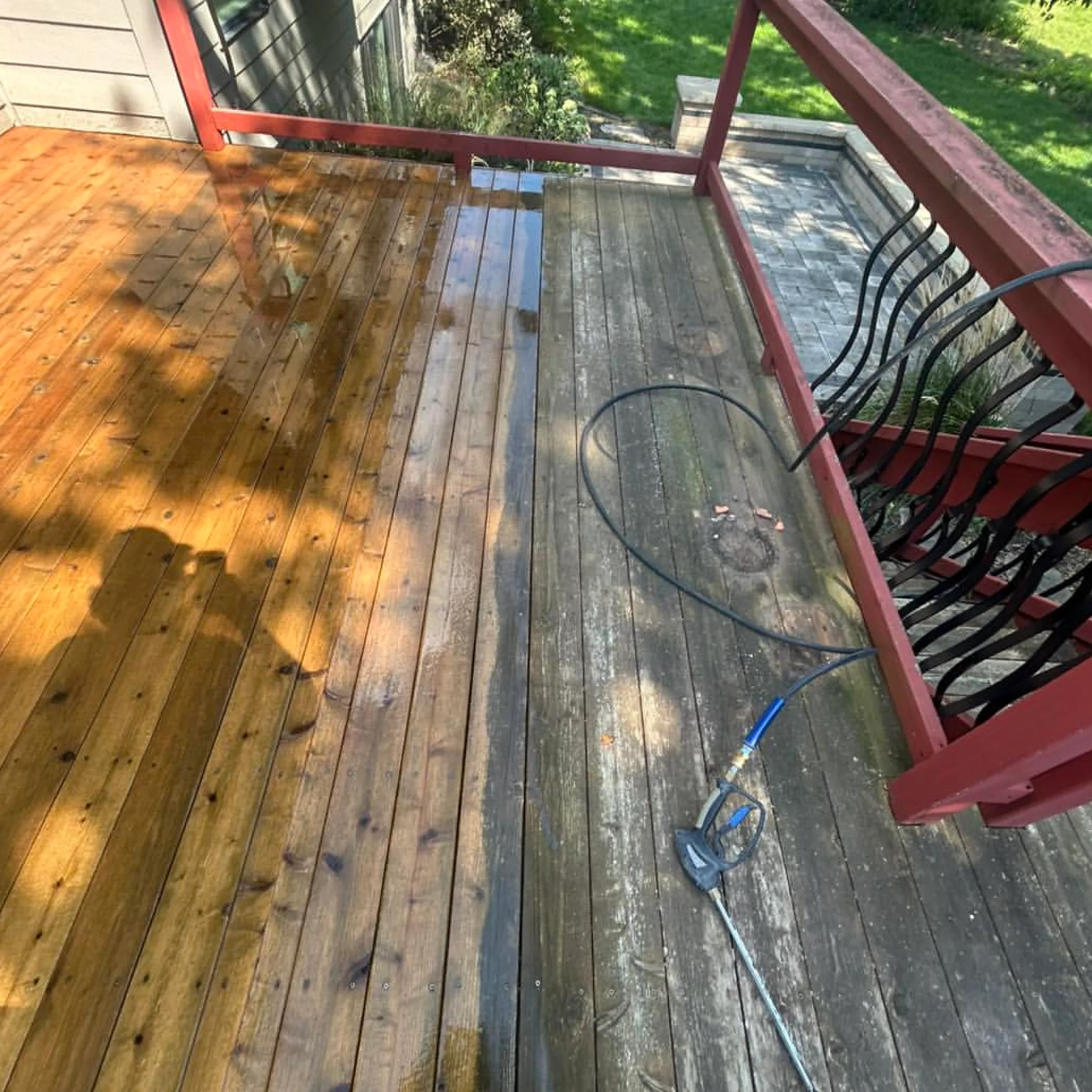
The idea is to employ the least forceful method that gets the job done. Do not go in hard on the timber unless it calls for it. Tackle it in sections so you can tell if the dirt is coming up and keep the cleaner in check.
Follow The Grain
Once the loose dirt is gone, put down some deck wash on a small part of the deck as per the label. Give it its time but let it not dry on the boards. A soft-bristled brush is what you need to scrub in the direction of the grain, with even pressure. Rinse well with clean water.
Applying more product will not make for a cleaner deck. There is no rule that stronger is better, in fact with older pine or soft hardwoods and timber of a previous coating it can be the opposite. Put on too much cleaner and you risk changing the wood’s colour or making subsequent oiling and sealing of the deck a problem.
Be Circumspect With Your Pressure Cleaning
While a pressure washer will get at the most tenacious grime, it is also capable of harming the timber. A conservative setting is called for as is keeping a sensible distance from the boards; do not let the nozzle sit still over one spot.
Aggressive use can leave soft timber with a furry raised grain, a roughness that will collect dirt and moisture and is not kind to bare feet. Should you have any doubts as to the equipment, it is cheaper in the long run to engage a professional than to put right an over-cleaned deck.
Dealing With Mould And Slippery Spots
You will find mould and algae in places where the timber is damp and out of the sun or has a leaf litter on it. More than a cosmetic issue, algae can make the decking treacherous around the pool or on the steps.
Address the growth and what is causing it: open up the airflow, unblock any drainage, put the wet mats away and trim back plants encroaching on the deck. Leave it damp after a clean and it will be dirty in no time.
Patience When It Comes To Stains
A good deck wash and some gentle brushing will see off the organic marks from bird droppings, flower pots and leaves. But old oil, tannin bleed and rust are more intractable. Test first since timbers vary in their response and work on one area only.
Under no circumstances mix your chemicals; what may seem like a good idea can yield fumes that are harmful or injure the wood. For a deep set stain sanding is a safer option than piling on more powerful chemicals.
Sanding And Repairs
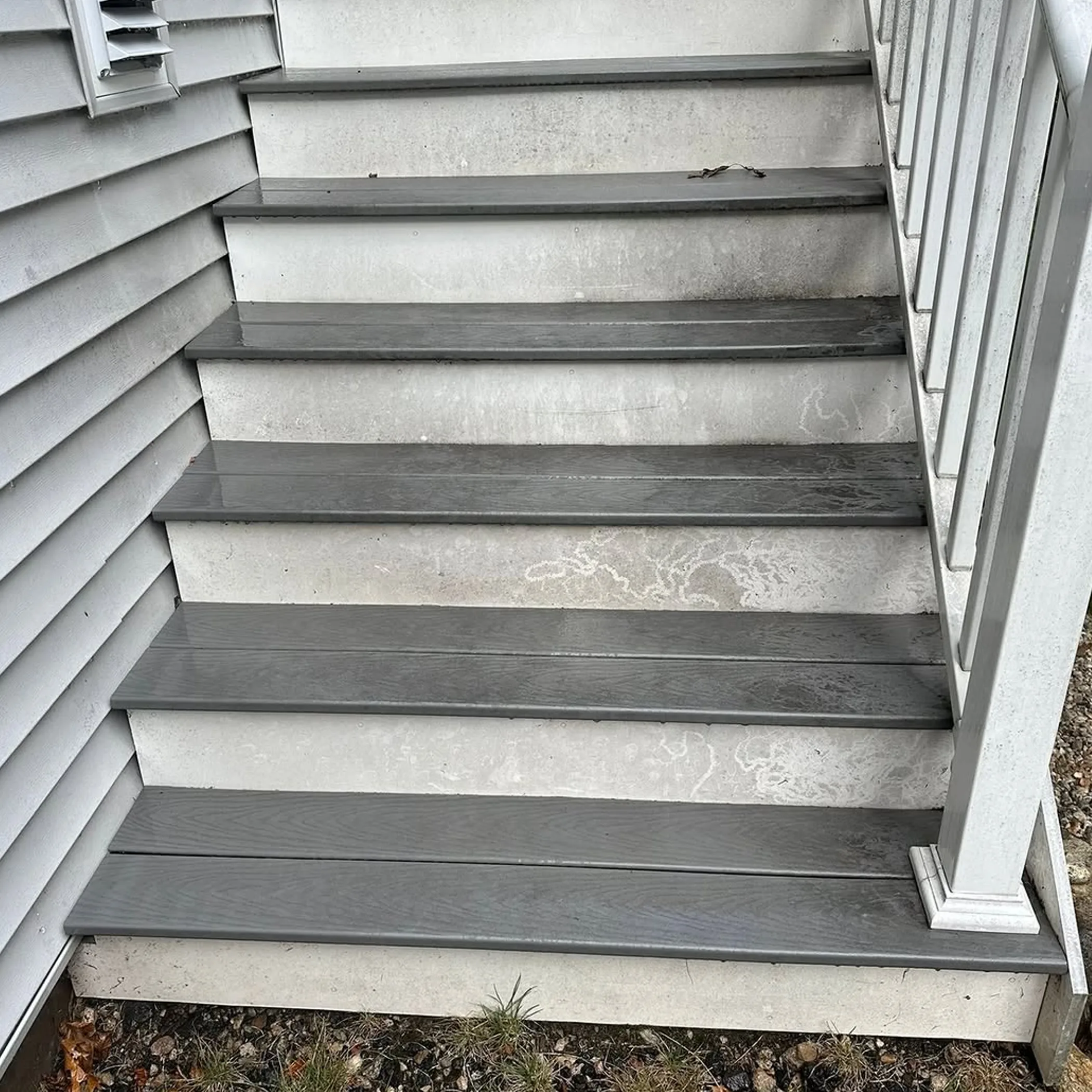
Sand the surface to get an even finish but do not think of it as a way to conceal structural defects. Rotten boards are not made any better for being sanded.
After washing give the deck to dry out completely; how long that takes is a matter of the timber, the shade, humidity and whether it has rained. On the coast in humid conditions the wood may seem dry on top while there is still moisture below.
When To Put The Sander To Work
For peeling coatings, weathering, light splinters and any raised grain, use the right equipment and do not dwell on a small area to the point of making hollows. Brush off every last bit of dust prior to putting on a protective coat.
Inspect the edges and stairs for soft or cracked boards, they take a lot of foot traffic. If there is decay or movement throughout the deck then have it looked at before you fork out for some cosmetic restoration.
Some Protection From The Elements
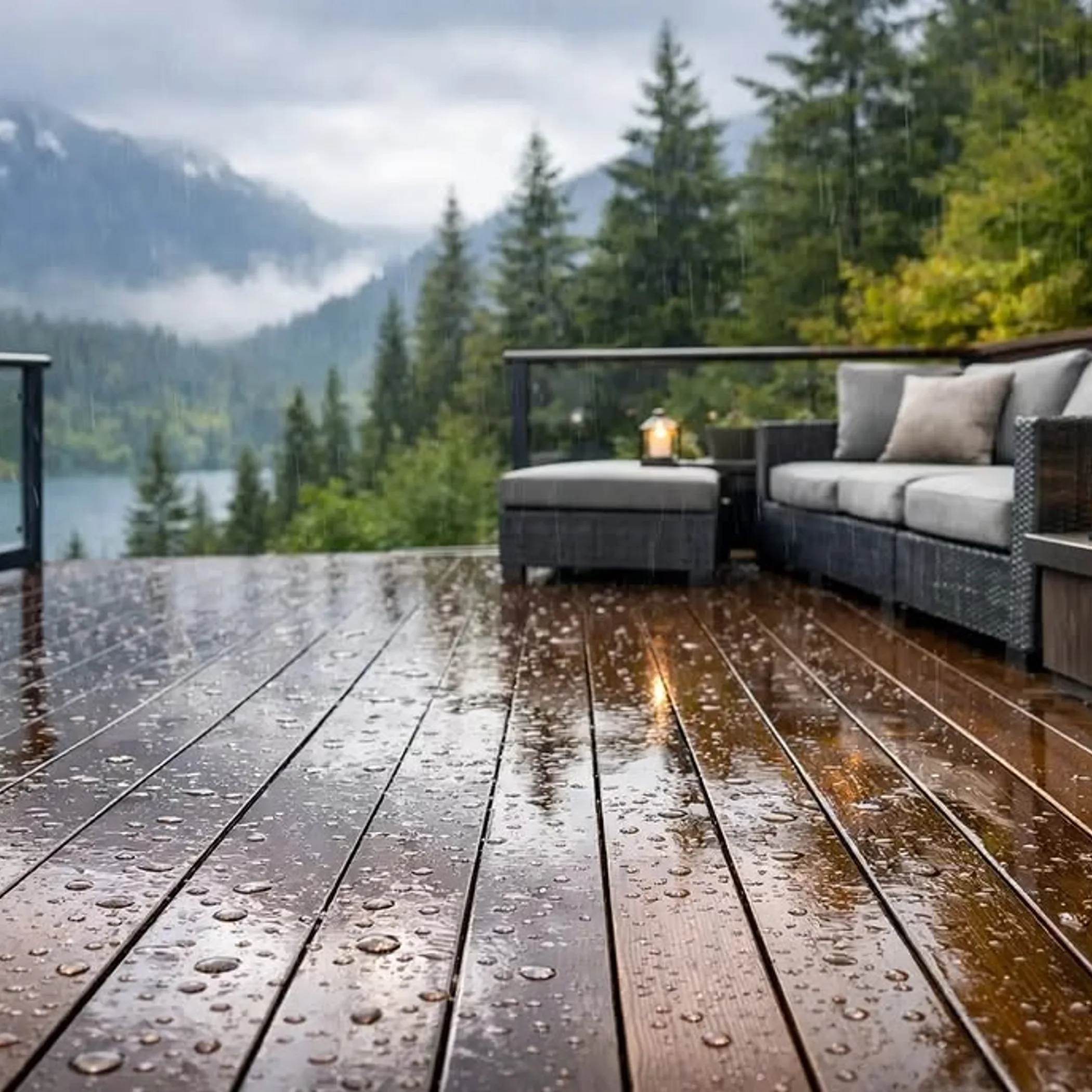
Sealing, staining and oiling go some way to mitigating UV and moisture damage but do not put timber in the maintenance-free category. These outdoor surfaces will call for inspection, re-oiling and a clean as they are exposed to the elements.
What product to use is dictated by the timber, its exposure and what look is wanted, so check with the manufacturer and make sure the surface is in order and compatible.
In Choosing A Finish
Oiling is a practical way to keep up the colour and nourish the timber and tends to be of a natural appearance. Stains put colour on the wood and sealers provide a protective layer. Some products purport to do both but read the label, not the marketing.
Do not put down puddles in the gaps of the boards with your thin, even coats; any excess will be sticky and uneven. And have a word with the forecast before you start, rain can ruin a fresh application.
Reality Versus Expectation
| Expectation | Reality |
|---|---|
| One might expect a single wash to put a deck in order | Deep stains and worn coatings could mean replacing boards or sanding. |
| Pressure cleaning is always the quickest method | It is not always quickest if it is going to gouge a soft board or raise the grain. |
| Oil will last for years without attention | The sun and footfall will dictate otherwise. |
| A dark finish can hide every problem | It can put a cover on a mark but will not mend rot or unsafe fixings. |
Putting a new coat over something chalky or peeling is a shortcut to patchiness and trouble next time round. Let a professional decide if the deck is in need of stripping or full restoration.
Maintenance According To The Season
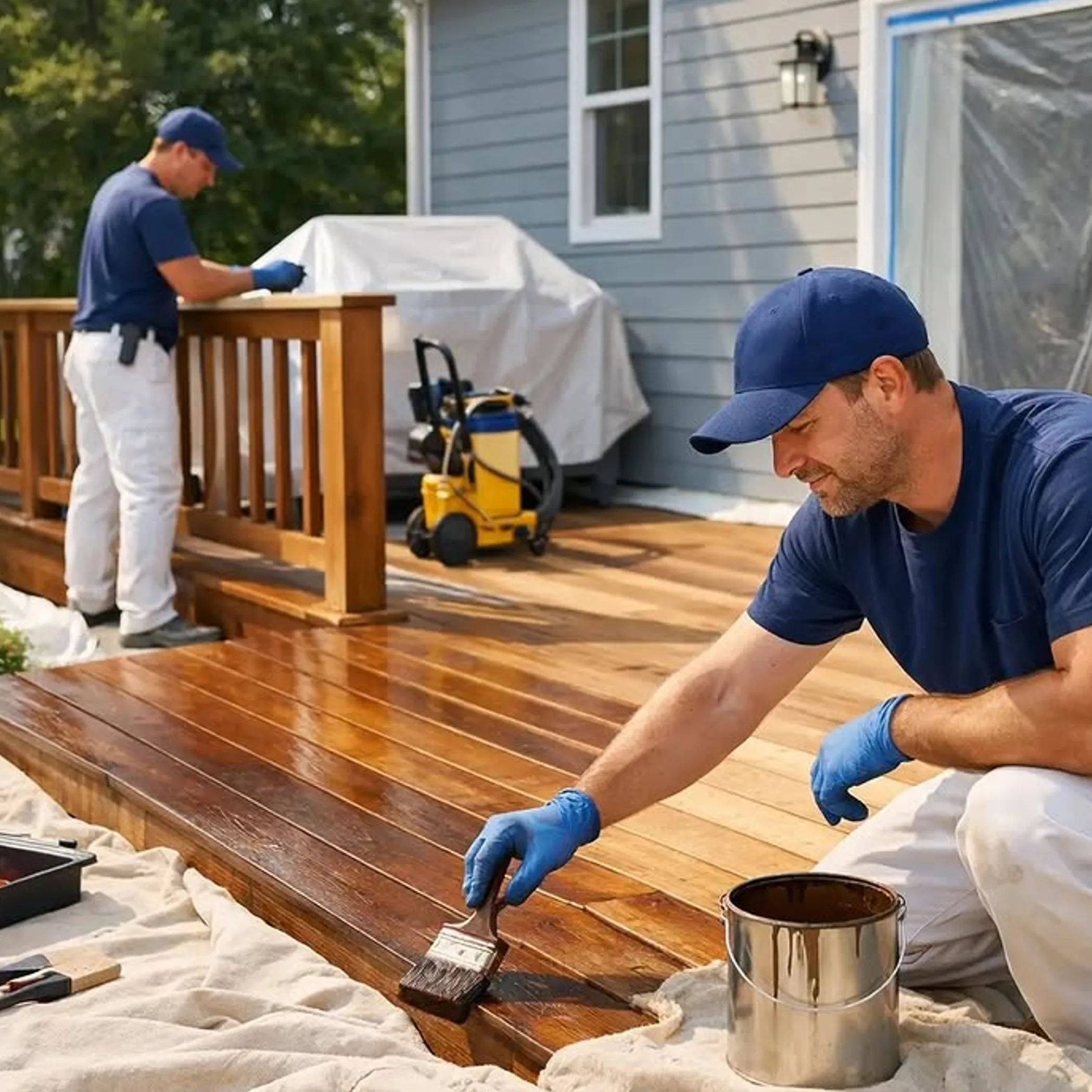
With the range of conditions in Australia you cannot follow a national schedule. Inland timber is subject to dust and drying under a hard sun, whereas a Queensland coastal deck has to contend with the rain and humidity.
A good time to inspect is after the wet season has run its course and the long rains are done, but before one gets to the height of outdoor entertaining. In the north there is the matter of cyclone warnings and storms from the wet season that can leave their share of debris and moisture; in the south mould is a risk with the dampness and winter shade, and the summer sun will hasten the drying and fading.
Follow A Simple Timing Guide
Every few months or so put the deck through a visual once over, certainly following any bad weather. Do not put off cleaning until you are faced with a blackened surface, get on it when the leaves, dirt and algae start to build up. If water ceases to bead as it used to have a look at the finish, but do not take that as your cue to oil without some testing.
Then there is the question of use. A balcony that sees little traffic does not demand the same level of care as an outdoor living space where the family and pets congregate for barbecues and muddy shoes are de rigueur. Finishes have a shorter life span if coastal salt, pool chemicals or trees are in proximity.
DIY Or Enlist Some Help
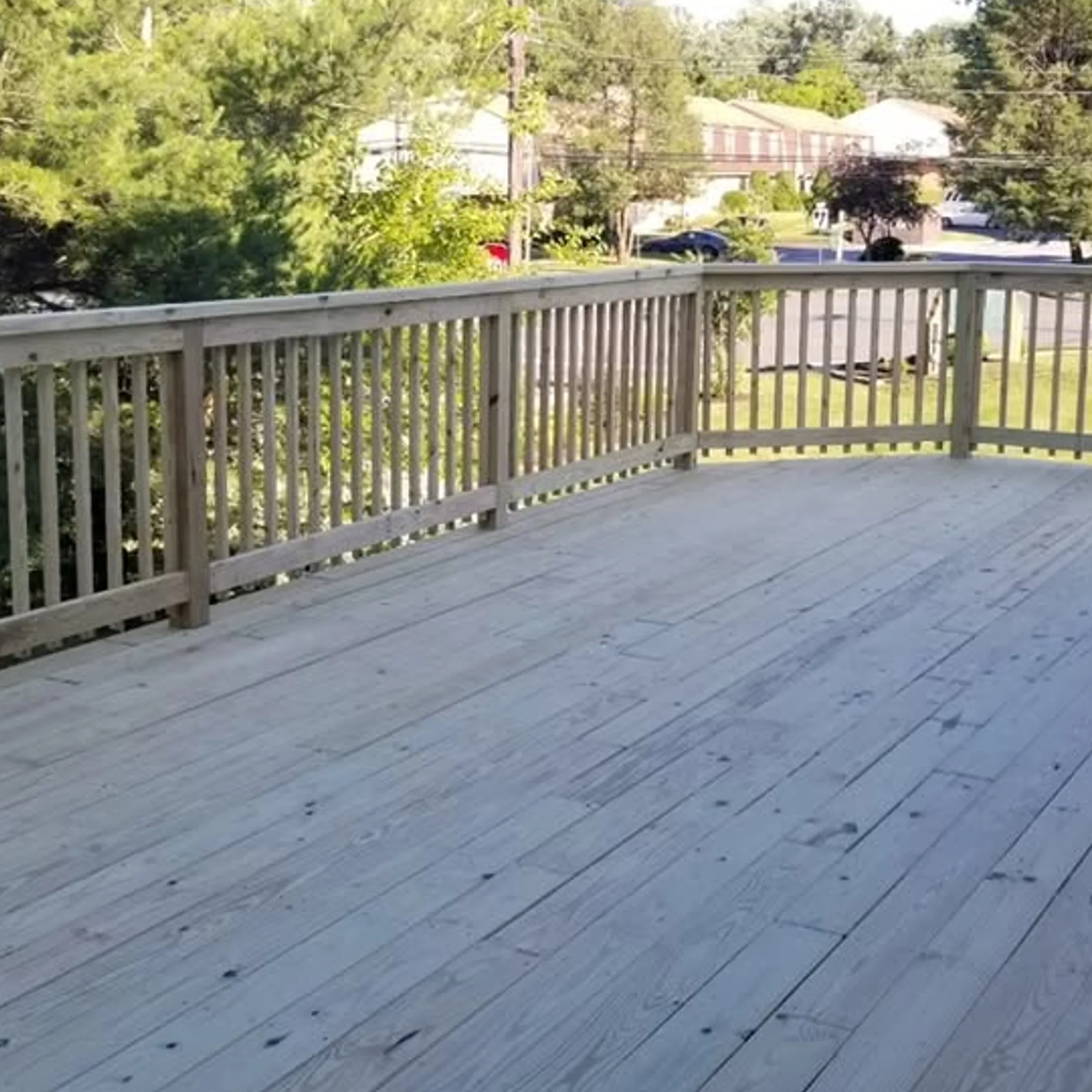
For those who can read the instructions, work in a safe manner and have the patience for preparation which will outlast the final rinse, DIY is an option. Provided the boards are in order and one is familiar with the coating system it makes for a sound weekend project.
But a professional is called for with a large or elevated deck, one that is hard to get to or has been put through its paces by the weather. The same applies if there is sanding to be done, or stain correction and repairs at height.
Get A Clear Quote
In putting a deck maintenance service to the test make sure the quote is inclusive of everything: the inspection, moving furniture, any mould treatment, sanding, materials, waste and the final coat as well as the cleaning. And get clarity on whether the price reflects the timber’s condition, labour hours or the area.
You may put in a search for a deck cleaning service or professional maintenance nearby but being close is no guarantee of quality. Put them to it for insurance details, product names, recent work and what they consider realistic drying conditions.
Costs will differ according to the size and access of the deck and how many stages of prep are in order. Expect to pay more for a full restoration with board replacement and multiple coatings than a straightforward clean. Have quotes in writing in AUD and confirm if GST is part of the figure.
Deck Maintenance FAQs
What Is The Best Deck Cleaner In Australia?
One cannot say there is a best cleaner for all decks here. It is a case of the timber species, the stain type, what coatings are in place and the extent of any mould or algae. Go with something for exterior timber, heed the instructions and put it to the test in a spot that is not obvious.
What Does A Deck Require By Way Of Maintenance?
Sweeping, washing as the occasion demands, keeping mould and algae in check, tending to any unsafe boards and now and then some sanding or coating work. How often is dictated by the climate, the finish and the amount of foot traffic.
How Much To Have A Deck Stained In Australia?
Without knowing the size and state of the deck there is no price to be had. An itemised quote in AUD should cover the preparation, sanding, repairs and labour. Timber in need of stripping before staining is a different proposition to an accessible deck in good order.
How To Tackle A Very Dirty Deck?
Remove any loose debris and clear the deck. Work in sections with a deck wash and a soft brush, then give it a good rinse. For anything that will not go one may have to sand or be gentle and repeat the process. Do not resort to maximum pressure off the bat, damaged timber will only ruin the outcome.
Is It All Right To Oil After Washing?
Not until the timber is dry and fit for the product. Weather, ventilation and the density of the wood will determine the time needed. Oil applied in haste can seal in moisture and result in uneven colour.
Have The Deck In Order
The way to go with deck cleaning in Australia is to be methodical: inspect, be gentle with the cleaning, make honest repairs and afford the timber the protection its exposure warrants. It is a matter of regular upkeep to forestall a big bill for restoration down the track and for the sake of safety and looks.
If one is doing the work or has engaged a service, factor in the weather and time to dry. A deck that has been refreshed is meant to stand up to the ordinary things of life: the odd leaf, a barbecue, muddy shoes and Percy the miniature schnauzer making a track of half the garden across it.
